

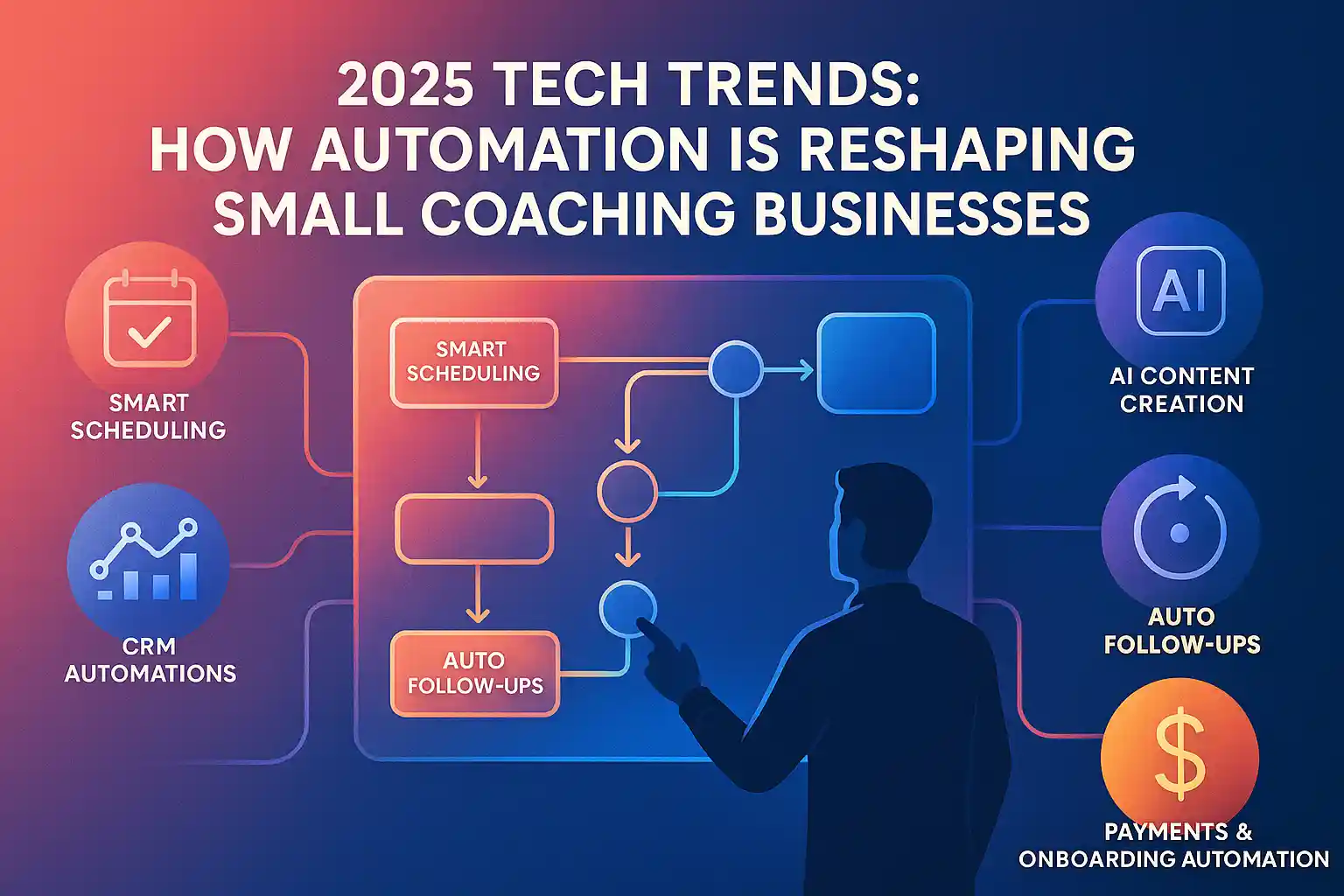
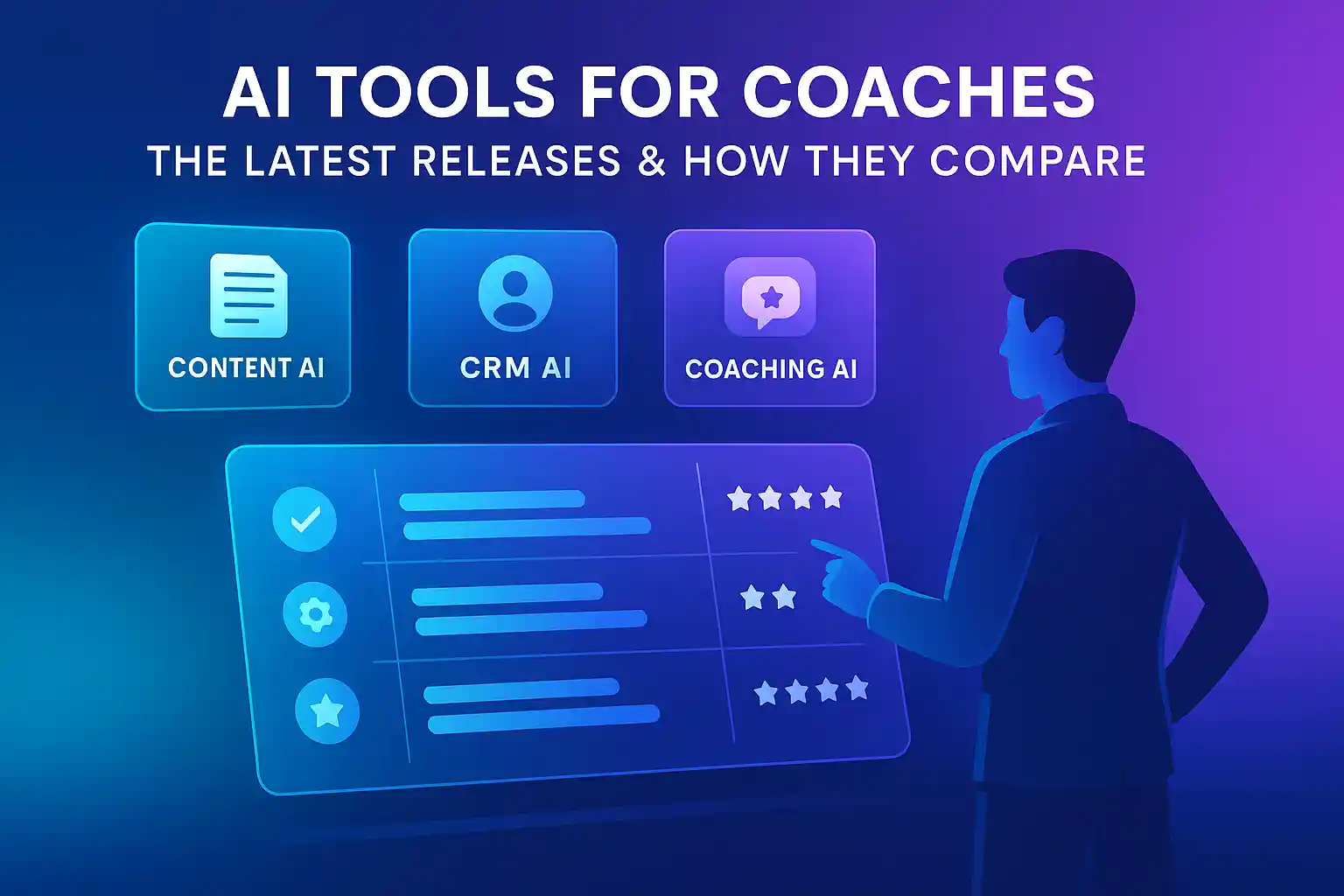

AI is revolutionizing the coaching industry, offering tools that enhance productivity, personalize client experiences, and help coaches scale their businesses without adding more hours to their workload. The latest AI releases in 2025 are smarter, faster, and more coach-friendly than ever before.
Why AI Tools Are Transforming Coaching in 2025
AI gives coaches an edge by supporting tasks that used to require manual work. From session summaries to content creation to automated client support, AI enables coaches to deliver more value with less effort.
Key advantages include:
- Personalized coaching journeys
- Automated admin and follow-ups
- Consistent client progress tracking
- Scalable coaching frameworks
- Enhanced content creation and planning
1. All-in-One AI Coaching Platforms
These platforms combine client management, automation, insights, and digital coaching models into one hub. They’re ideal for coaches ready to scale while maintaining consistent quality.
Best for:
- Executive & leadership coaches
- Business coaches
- Coaches handling multiple clients at once
Key strengths:
- Automated session notes
- Built-in habit tracking
- Personalized micro-coaching messages
- Client dashboards with progress insights
2. AI Tools for Course Creation & Digital Products
These tools help coaches turn their expertise into online programs, workshops, templates, and memberships—fast.
Best for:
- Life coaches
- Wellness coaches
- Business & mindset coaches
Key strengths:
- Auto-generated course outlines
- Lesson scripts, workbooks, and templates
- Streamlined group program creation
- Supports passive income product launches
3. AI Performance & Corporate Coaching Tools
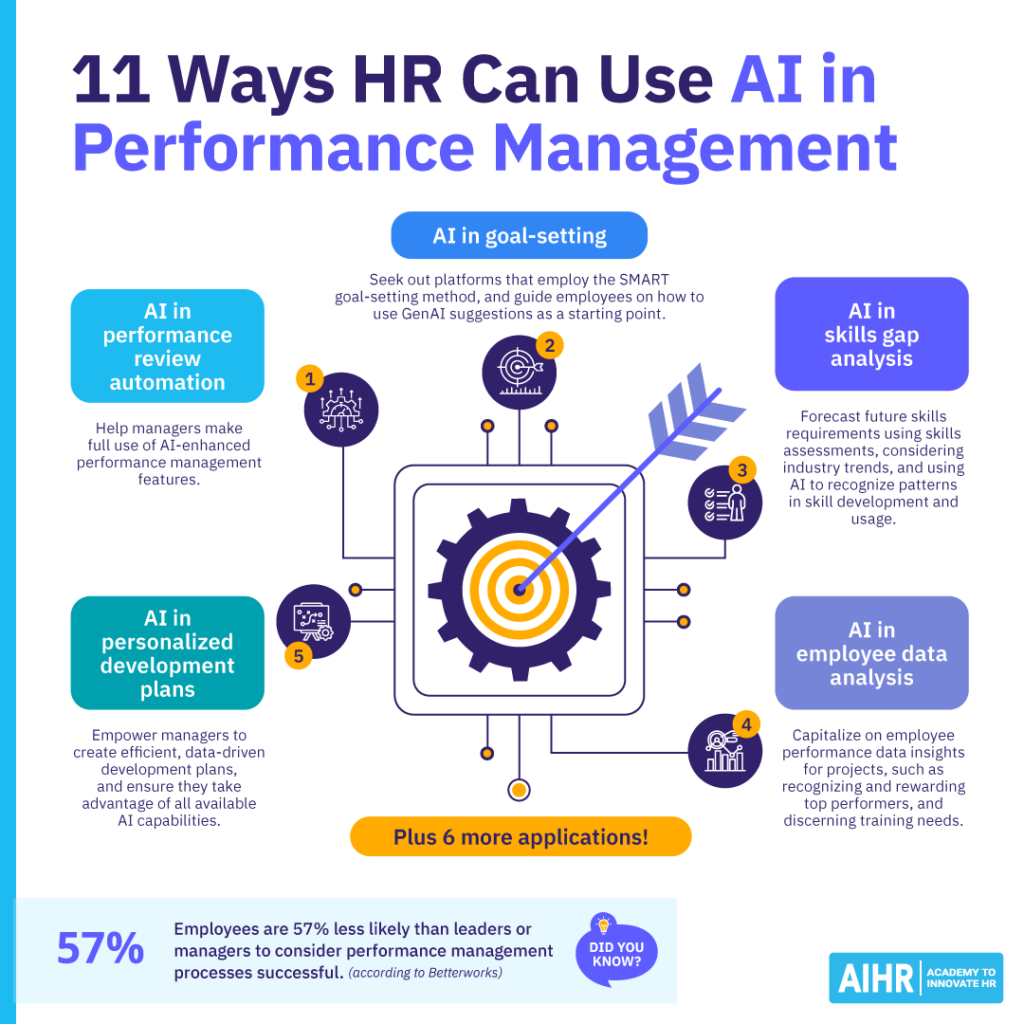
These tools are built for coaches working with companies, leaders, or sales teams who require measurable improvement.
Features include:
- Real-time performance analytics
- Behavioral insights
- Role-play simulations
- Team dashboards
Best for:
- Corporate coaches
- Leadership coaches
- Sales & performance coaches
4. General AI Assistants for Coaching Support
These AI assistants support coaches with behind-the-scenes work like content creation, marketing, session prep, and communication.
Ideal uses:
- Writing newsletters, content, or scripts
- Creating frameworks and coaching exercises
- Drafting client messages and summaries
- Brainstorming ideas and strategies
Best for:
How These AI Tools Compare

If you want to scale your coaching practice:
Choose an AI coaching platform with automation + client tracking.
If you want to launch digital products:
Go with an AI course creation tool.
If you work with organizations or teams:
Use AI performance coaching platforms.
If you need marketing and admin support:
Use general AI assistants.
What Coaches Must Consider Before Choosing AI Tools

Important factors:
- Client data privacy
- Balance between AI and human interaction
- Avoiding over-automation
- Your comfort with tech tools
- Client acceptance of AI support
AI should assist your coaching—not replace your unique human presence.
What Coaches Should Do Next

To stay competitive in 2025 and beyond, coaches should:
- Test different AI tools to match their coaching style
- Integrate AI for structure while keeping coaching human
- Add AI-enhanced programs or micro-coaching options
- Use AI analytics to measure transformation
- Stay updated on new AI releases and ethical best practices
Conclusion
AI is no longer optional—it’s essential for coaches who want to grow, scale, and serve clients with exceptional quality. The most successful coaches in 2025 are those who blend AI-powered efficiency with human-centered transformation.
The future of coaching is hybrid:
AI for systems, structure, and scale — human insight for breakthroughs.