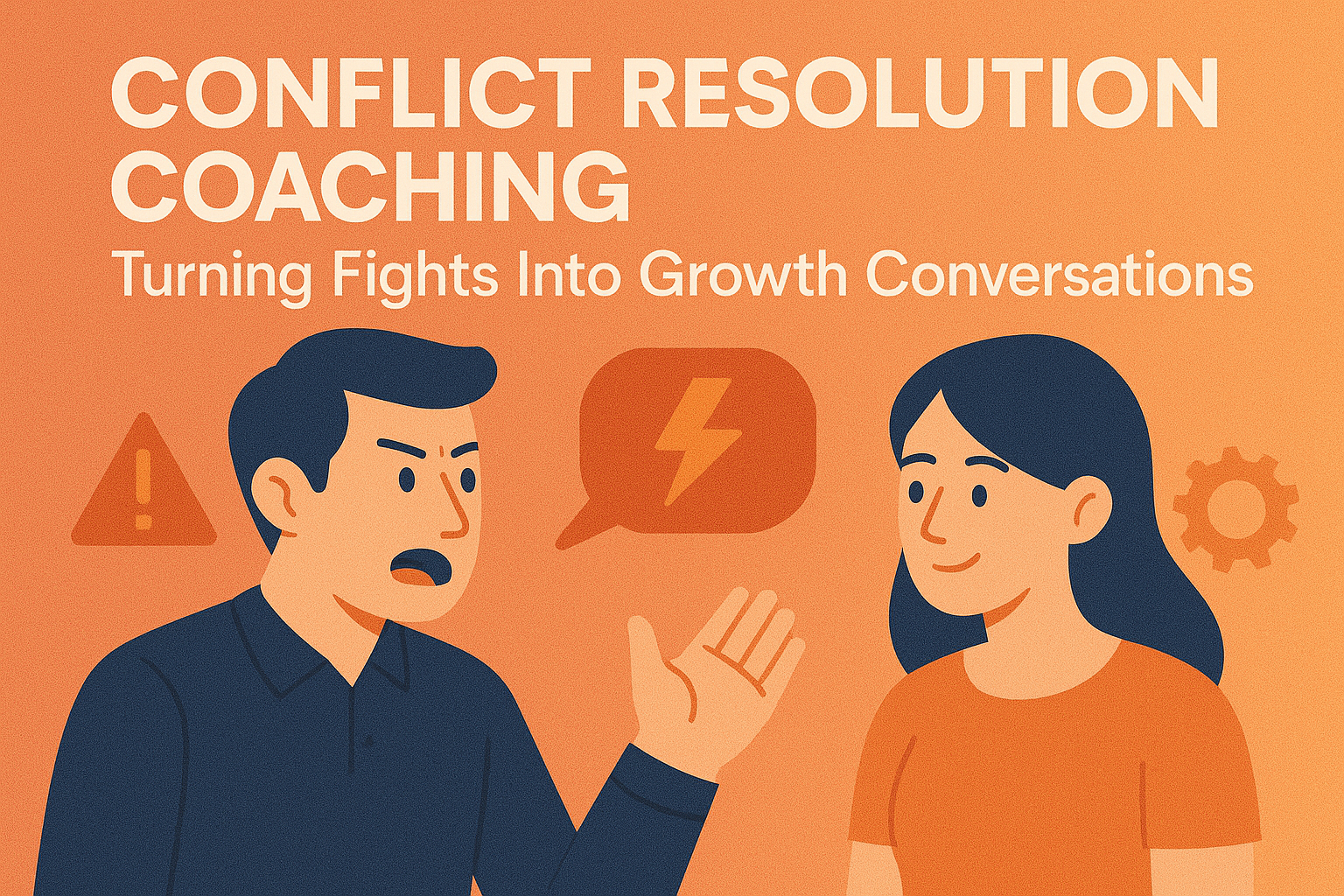

Every relationship has conflict — but not every relationship knows how to grow from conflict.
Arguments, misunderstandings, tension, and emotional triggers are unavoidable. What is avoidable is the cycle of blame, shutdown, defensiveness, or emotional withdrawal that keeps couples stuck.
Conflict Resolution Coaching helps clients learn how to transform fights into constructive, meaningful, and emotionally healthy conversations. With the right tools, conflict becomes a doorway to deeper connection, intimacy, and understanding.
This guide explores the psychology behind conflict, the patterns couples fall into, and the modern coaching frameworks that turn destructive arguments into powerful growth conversations.
🌪️ Why Conflict Happens in Relationships
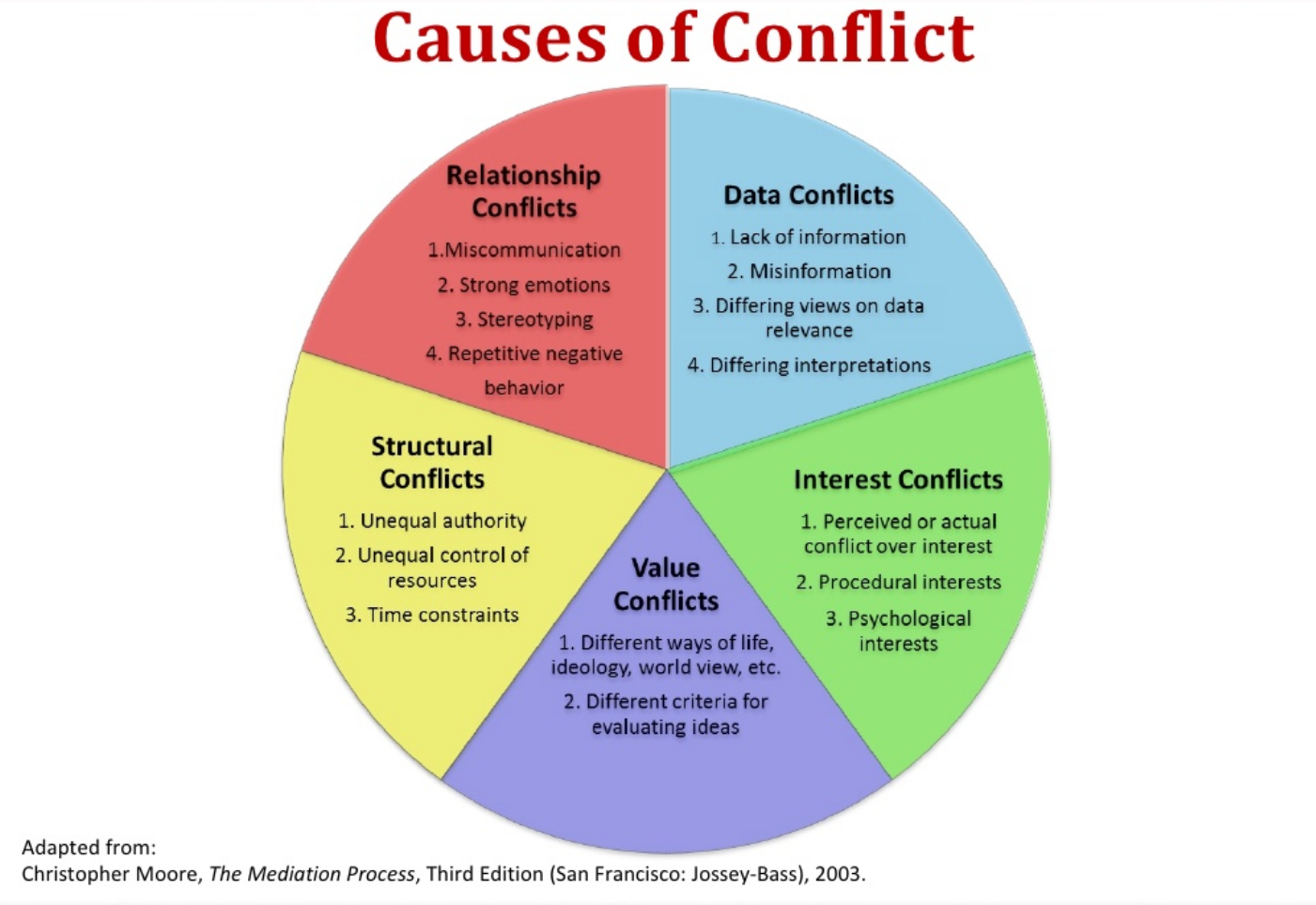
Most conflict is not about:
- The dishes
- The tone
- The late reply
- The weekend plans
It’s about:
- Feeling unheard
- Feeling unseen
- Feeling unsafe
- Feeling disconnected
- Old wounds being activated
- Differences in communication styles
- Unmet emotional needs
When couples understand the root cause, conflict becomes easier to navigate.
🔥 Common Destructive Conflict Patterns (That Coaches Help Break)
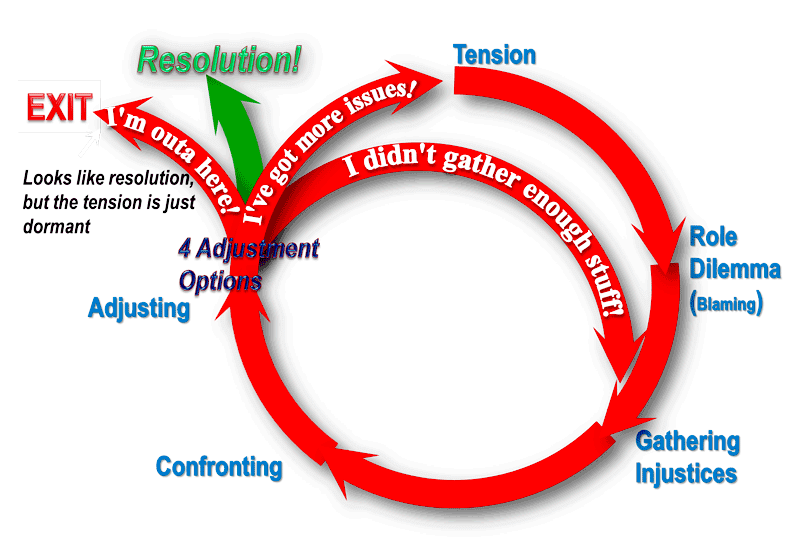
1. The Pursuer–Withdrawer Pattern
- One partner seeks connection, clarity, or reassurance
- The other shuts down, pulls away, or avoids
This creates emotional panic on one side and overwhelm on the other.
2. Blame–Defend Cycle
- Partner A criticizes
- Partner B defends
- Both feel misunderstood
- Emotions escalate
3. Trigger Stacking
Small issues pile up until one partner explodes emotionally.
4. Avoidance Loop
Couples avoid conflict → tension builds → resentment grows
Eventually, the smallest issue triggers a bigger fight.
5. Emotional Flooding
When the nervous system becomes overwhelmed and logical communication shuts down.
Coaches help clients break these cycles with practical tools and emotional intelligence training.
💡 The 4-Pillar Conflict Resolution Coaching Framework

A powerful framework for helping couples resolve conflict:
1. Awareness
Understanding triggers, emotions, and subconscious patterns.
2. Regulation
Managing emotional intensity before communicating.
3. Communication
Expressing needs clearly, calmly, and respectfully.
4. Repair
Rebuilding trust and connection after conflict.
🧠 Pillar 1: Awareness — Understand What’s Really Triggering the Fight

Coaches help clients explore:
- What triggered the reaction
- What deeper fear or need is behind it
- How their upbringing or past relationships influence the moment
- Whether the conflict activates past emotional wounds
Typical deeper triggers include:
- “I feel invisible.”
- “I’m scared of being abandoned.”
- “I don’t feel respected.”
- “I’m afraid of losing you.”
- “I feel not good enough.”
Awareness turns conflict from chaos → clarity.
🌬️ Pillar 2: Emotional Regulation — Calm First, Communicate Second

Conflict escalates when the nervous system is overwhelmed.
Coaches teach:
- The 60-second pause
- Breathwork to calm the body
- “Name the emotion” technique
- Taking space without abandoning the relationship
- Self-soothing strategies
When emotions settle, communication becomes safer and more productive.
🗣️ Pillar 3: Conscious Communication — From Attacking to Understanding
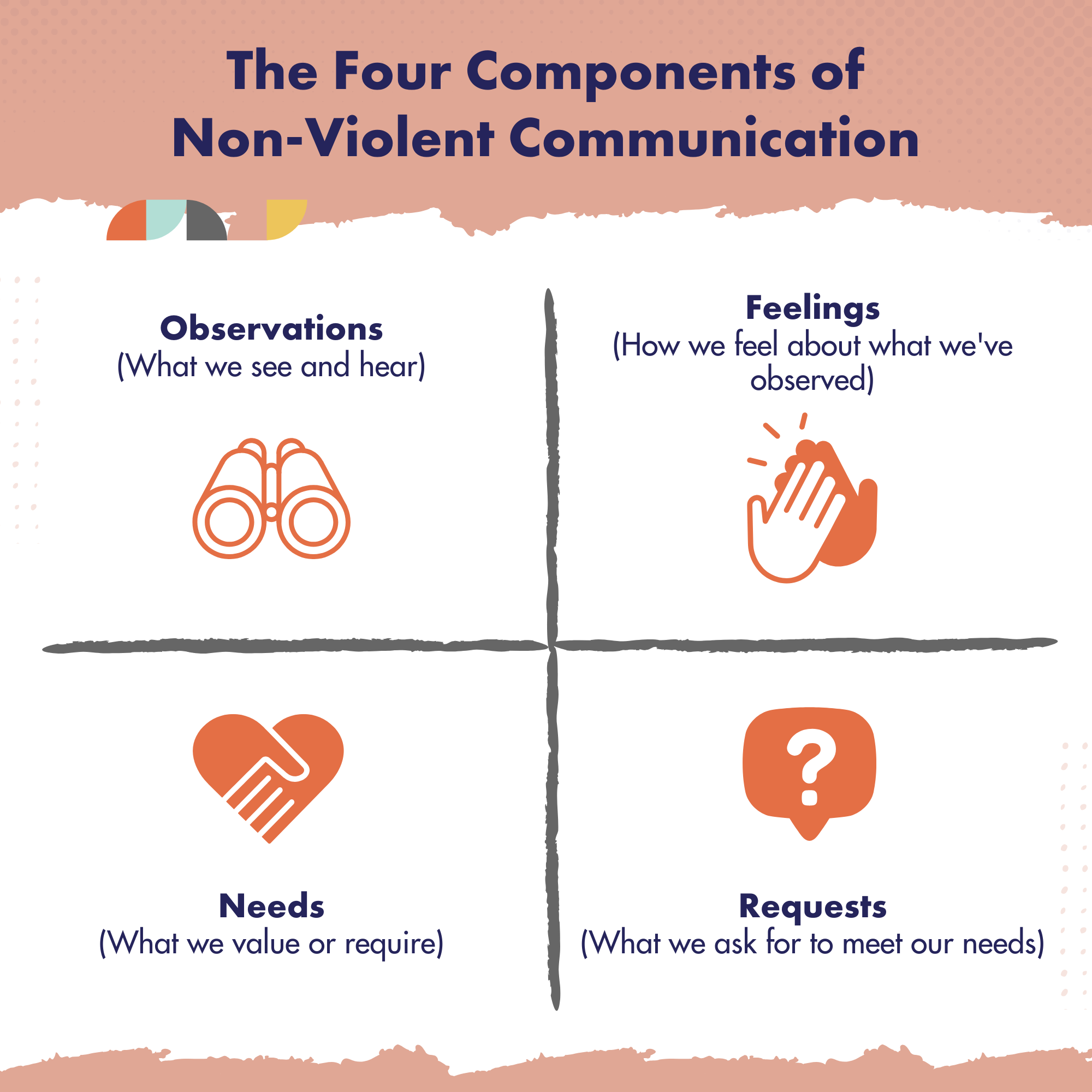
Coaches teach modern communication tools:
1. The “I Feel, When, Because” Framework
Instead of:
“You never listen.”
Use:
“I feel unheard when we talk while distracted because I want us to connect.”
2. Clarify Before Reacting
“Just to understand — what did you mean by that?”
This prevents misinterpretations.
3. The Gentle Start-Up
Starts conflict softly rather than harshly.
Example:
“I need your help with something that feels important to me.”
4. The Listener–Speaker Method
One speaks, one listens, then switch.
Improves empathy and reduces defensiveness.
5. Avoiding the 4 Toxic Behaviors (Gottman’s Four Horsemen)
- Criticism
- Contempt
- Defensiveness
- Stonewalling
Coaches teach couples how to replace these with healthy alternatives.
❤️ Pillar 4: Repair — Turning Fights Into Moments of Growth

Repair is the MOST important part of conflict resolution.
Coaches guide clients to:
- Acknowledge the hurt
- Validate each other’s perspective
- Offer genuine apologies
- Express appreciation
- Reconnect emotionally
- Reaffirm commitment
Sample Repair Statements:
- “I see how that hurt you, and I’m sorry.”
- “I want to understand you better.”
- “Thank you for being patient with me.”
- “Let’s try this again together.”
Repair builds safety, trust, and emotional intimacy.
🔄 How Coaches Turn Conflicts Into Growth Conversations

Coaches help couples transform conflict by guiding them through:
✔ Reflective Dialogue
Both partners share their experience without interruption.
✔ Emotional Insight Mapping
Identifying what deeper emotions the conflict activated.
✔ Needs Identification
Understanding what each partner needed but didn’t receive.
✔ Pattern Recognition
Identifying repeating loops, triggers, and relational dynamics.
✔ Growth Questions
- “What did this conflict reveal about your needs?”
- “What would a secure version of you do next time?”
- “What support do you need from your partner?”
This turns conflict into an opportunity for evolution.
🌱 Conflict as a Catalyst for Relationship Growth
Healthy conflict leads to:
- More emotional intimacy
- Deeper understanding
- Stronger trust
- Improved communication
- Greater emotional safety
- Stronger sense of partnership
The goal is not to eliminate conflict — it’s to build the skills to navigate it well.
✨ Final Thoughts: Conflict Isn’t a Threat — It’s an Invitation

Conflict is not a sign of a broken relationship.
It’s a sign that something inside the relationship wants to be understood, healed, or strengthened.
With the right coaching tools, couples learn to:
- Stay connected during tension
- Communicate with compassion
- Repair quickly
- Validate each other’s emotions
- Turn reactive moments into reflective ones
- Replace fear with curiosity
- Grow rather than break
Conflict becomes not a point of separation —
but a path to deeper connection, emotional intimacy, and lasting partnership.