

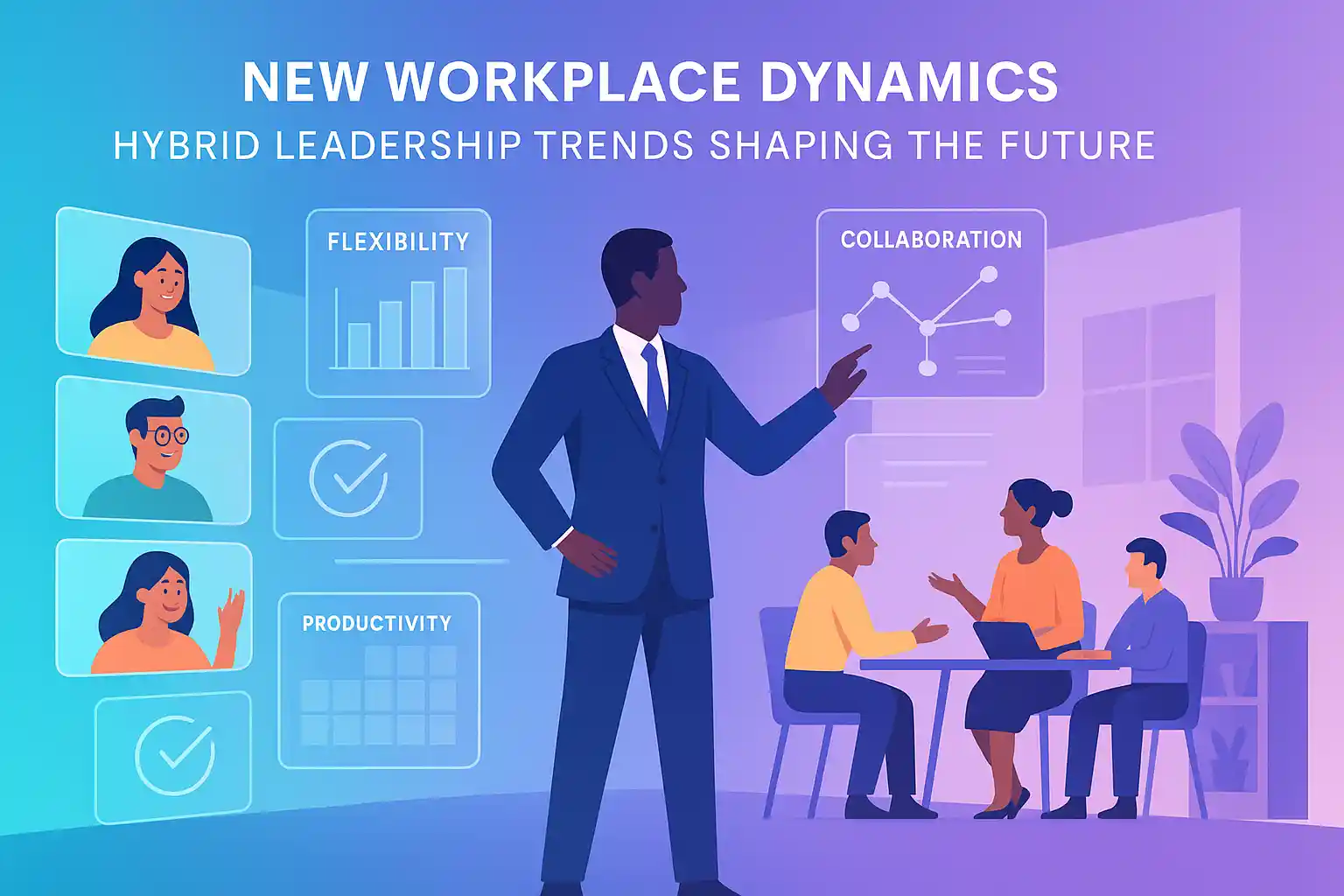

As workplaces evolve globally, hybrid work models — blending remote and in-office work — are becoming a permanent fixture. This shift is reshaping leadership styles, team dynamics, and organizational culture. For coaches, managers, and organizational leaders, understanding how hybrid leadership is emerging can help prepare teams for success in this new normal.
Why Hybrid Work Demands a New Kind of Leadership

- Hybrid work structures give employees flexibility in time and location — often combining remote work days with on-site days. This flexibility supports better work-life balance and can boost employee satisfaction.
- Traditional leadership — designed for fully in-office teams — often falls short in hybrid settings. Leaders need to adapt how they communicate, build trust, and maintain cohesion across physical and virtual environments.
- The complexity of hybrid teams (some working remotely, some on site, different schedules, different modes of communication) requires leaders who can navigate uncertainty, provide clarity, and foster inclusivity.
Key Hybrid Leadership Trends in 2025
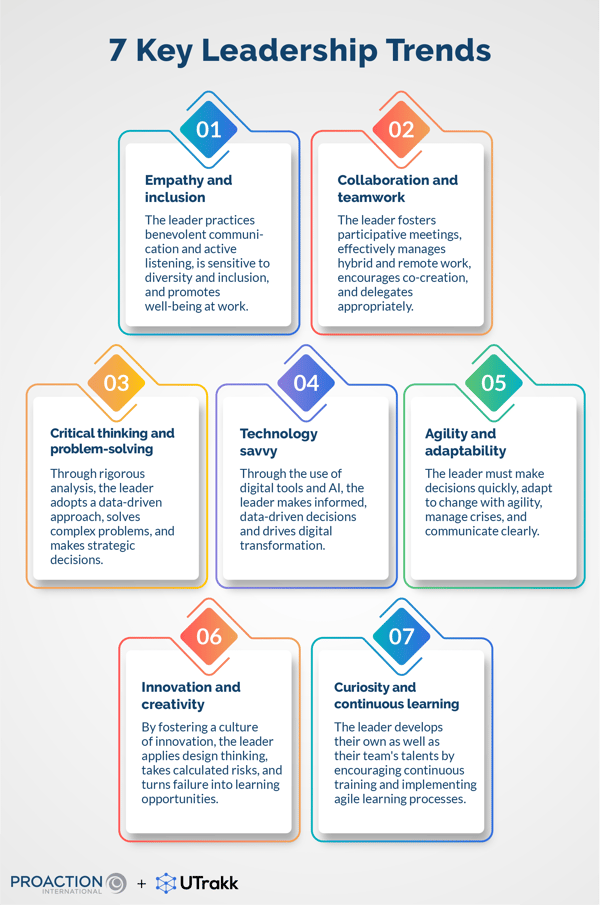
1. Agile, Trust-Centered Leadership
Leaders are moving from command-and-control to trust-based leadership — emphasizing autonomy, outcomes, and psychological safety rather than constant oversight. This flexibility helps hybrid teams stay motivated and productive even when dispersed.
2. Emphasis on Communication & Inclusion
Communication strategies now include asynchronous tools, regular check-ins, transparent decision-making, and creating inclusive practices so remote and on-site employees feel equally valued.
3. People Skills, Emotional Intelligence & Well-being
Hybrid leaders prioritize empathy, emotional awareness, well-being, and mental-health sensitivity. Ensuring social connection and maintaining workplace culture across locations is critical.
4. Performance- and Outcome-Based Management Over Attendance
Rather than judging productivity by hours logged or physical presence, hybrid leadership shifts toward outcome-based evaluation — focusing on deliverables, quality, and impact.
5. Leveraging Technology to Bridge Gaps
Use of collaboration tools, virtual meeting platforms, asynchronous communication, shared digital workspaces — all used intentionally to keep hybrid teams connected and aligned regardless of location.
Opportunities & Advantages of Hybrid Leadership for Organizations
- Better work-life balance for employees, leading to increased satisfaction, retention, and lower burnout.
- Access to a broader talent pool, unconstrained by geography — enabling organizations to hire remote talent globally while maintaining local presence.
- Cost savings on infrastructure — fewer desks required, less office space — while maintaining flexibility and productivity.
- Greater resilience and adaptability — hybrid leadership allows faster response to disruptions and supports change management more effectively.
Challenges & What Leaders Must Watch Out For

- Risk of isolation or disengagement for remote employees if communication and inclusion are not handled carefully.
- Difficulty maintaining team cohesion and organizational culture when part of the team is remote and part in-office — especially over longer periods.
- Management overload — leaders must juggle multiple modalities: remote, in-office, asynchronous, synchronous — demanding time, skills, and mental effort.
- Possibility of communication gaps, misunderstandings, and uneven visibility — remote employees may feel overlooked.
What Coaches & Organizational Leaders Should Do to Thrive in Hybrid Era

- Focus on leadership training that builds emotional intelligence, communication, inclusion, and adaptability.
- Design hybrid-friendly policies — flexible schedules, transparent communication norms, shared collaboration tools, asynchronous-first mindset.
- Foster psychological safety and trust — regular check-ins, empathy, inclusion, mental-well-being support regardless of location.
- Use performance-based metrics rather than hours or attendance; prioritize outcomes, deliverables, accountability.
- Leverage digital tools effectively — shared collaboration platforms, asynchronous communication, clear documentation, inclusive meeting practices.
- Promote hybrid-team culture intentionally — team rituals, virtual and in-person team building, clear values, shared purpose.
What the Future Likely Holds: Hybrid Work 2.0 & Beyond
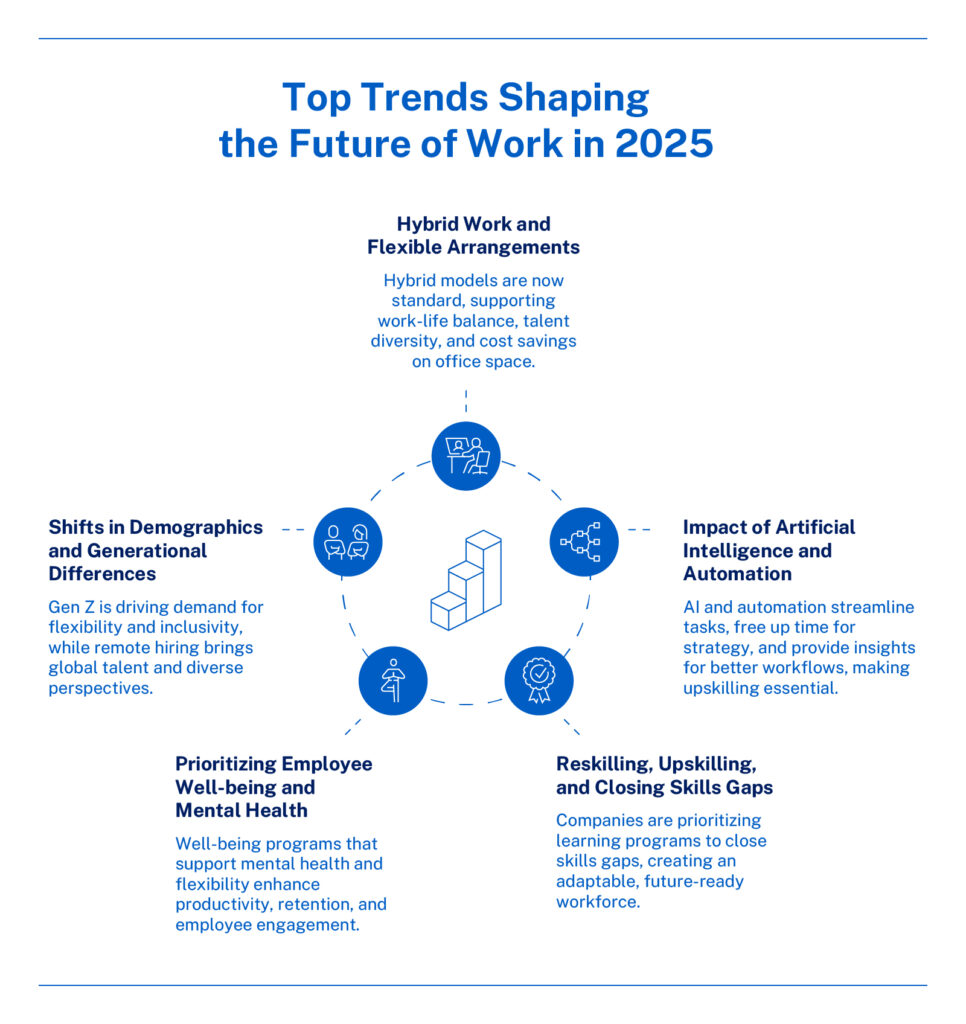
- Hybrid work and hybrid leadership are likely to become standard practice in many industries — not a temporary experiment.
- Leadership will evolve to prioritize flexibility, empathy, and adaptability, balancing human needs with business goals.
- Organizations may adopt blended leadership models — combining asynchronous remote collaborations, periodic in-person touchpoints, and flexible scheduling.
- Coaching, mentoring, and leadership development — both internal and external — will become critical tools to help teams navigate hybrid complexity.
- Employee well-being, inclusion, autonomy, and trust will remain central — shaping how companies hire, retain, and lead talent in the coming years.
Conclusion
The shift to hybrid workplaces isn’t just about work locations — it’s transforming how leadership works. Hybrid leadership requires new skills: empathy, flexibility, trust building, communication, and outcome-focus.
For coaches, managers, and organizational leaders, embracing these changes thoughtfully can unlock better productivity, happier teams, stronger culture, and resilience. The future of work demands hybrid-ready leadership — and adapting now can shape success for years to come.